
 Facebook
 X
X
 Pinterest
 Copy Link
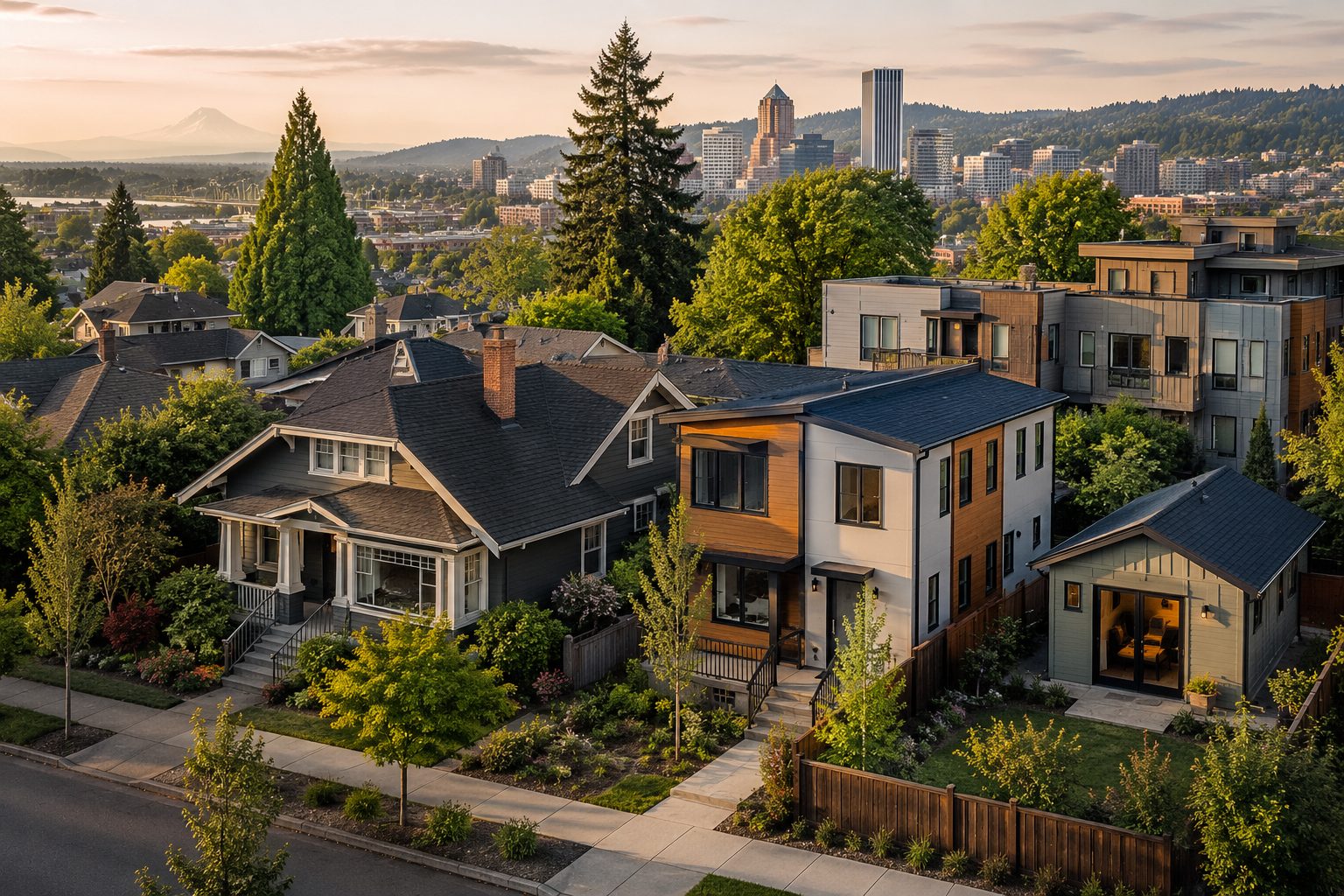
If you’ve been following the housing market, you’ve probably heard a lot about the housing shortage—and about how desperately we need to build more homes.
On July 11, 2026, Congress took a significant step in that direction when the 21st Century ROAD to Housing Act became federal law. The bipartisan legislation is intended to increase housing supply, reduce barriers to construction, expand housing options and make it easier for more Americans to find an affordable place to live.
That sounds promising.
But here’s the catch: Congress doesn’t actually build the houses.
And that’s especially important here in Portland.
The federal government can provide incentives and remove certain barriers, but many of the decisions that determine whether a new home gets built—and how much it costs—are made much closer to home.
So, will this new law make housing more affordable?
It could help. But don’t expect an overnight change in home prices.
The Basic Problem: We Haven’t Built Enough Homes
The affordability problem isn’t particularly complicated at its core.
When there are more people looking for homes than there are homes available, prices tend to rise.
For years, the United States hasn’t built enough housing to keep pace with population growth and the formation of new households. The pandemic made the problem even more obvious as demand surged while construction faced labor shortages, supply-chain problems and rapidly increasing material costs.
The result was a familiar story:
More buyers competing for fewer homes.
That pushed prices higher and left buyers with fewer choices.
The ROAD to Housing Act is designed, in part, to address that fundamental problem by encouraging more housing construction.
And that matters.
But building more homes is easier said than done.
One of the Biggest Issues: The Cost of Building
A house can be expensive before construction even begins.
Developers and homeowners can spend months navigating zoning requirements, engineering, environmental reviews, design requirements, permits and inspections.
Then there are financing costs, insurance, labor, materials and infrastructure.
Every delay adds another expense.
And ultimately, those expenses have to be absorbed somewhere. For a builder, they become part of the cost of producing the home. For a homeowner doing a major addition or redevelopment, they become part of the cost of the project.
This is one reason streamlining the development process can matter so much.
The ROAD to Housing Act attempts to reduce some of the federal barriers and encourage housing production. But here is where things get particularly interesting for Portland:
Our local permitting and development system is a major part of the equation.
Portland: Where “Just Build More” Gets Complicated
Portland has already been working on many of the same issues the federal legislation is trying to address.
Oregon has taken significant steps toward allowing more housing types in residential neighborhoods. Under Oregon’s middle-housing rules, larger cities and communities in the Portland metropolitan area generally must allow housing such as duplexes, triplexes, fourplexes, cottage clusters and townhouses in areas that historically allowed primarily single-family homes.
Portland’s Residential Infill Project expanded the types of housing that can be built in residential zones, and the city’s RIP2 work extends those changes to larger residential lots in outlying areas.
In other words, Portland has already been trying to answer an important question:
How do we fit more homes into a city where land is limited?
But allowing something to be built and making it financially feasible to build are two different things.
Permits and Fees Matter More Than You Might Think
One of the biggest Portland-specific issues is the cost and complexity of getting a project approved.
Portland Permitting & Development tracks permit review times and acknowledges that larger and more complicated projects require more extensive review and can take longer to move through the system.
And the costs aren’t limited to one building permit.
Depending on the project, developers can encounter building, plumbing, electrical and mechanical permit fees, plan-review fees, environmental and tree-review fees, transportation-related costs and System Development Charges (SDCs).
Portland specifically warns that SDCs can substantially affect a project’s budget and recommends determining those costs early in the process.
Portland also increased a number of permitting and development fees in 2026. The city says overall fee revenue is expected to increase by about 8 percent under the new fee structure.
This is an important piece of the affordability conversation.
If we want to build more homes, we have to look not only at whether housing is allowed, but also at how much it costs to produce that housing.
Oregon Is Already Trying Something Similar
Here’s another reason the ROAD to Housing Act is particularly interesting from a Portland perspective: Oregon has already been experimenting with policies designed to increase housing production.
The state’s middle-housing laws are intended to make it easier to build smaller and more diverse housing types, rather than requiring every residential lot to produce a traditional detached single-family home.
That can mean a duplex where there once would have been one house.
Or a small cluster of homes.
Or townhouses on land that might previously have supported only one detached residence.
These types of homes won’t solve the affordability problem by themselves. But they can create something that Portland desperately needs:
More choices.
And more choices matter.
Not every buyer needs—or can afford—a 2,500-square-foot detached house.
What About the Urban Growth Boundary?
Portland also has another challenge that many cities don’t face in quite the same way: our Urban Growth Boundary.
The UGB is designed to limit urban sprawl and protect surrounding farmland and natural resources. It’s an important part of Oregon’s land-use system.
But it also means that the Portland metropolitan area can’t simply keep spreading outward indefinitely.
Oregon’s housing analysis recognizes the importance of the Metro Urban Growth Boundary and requires Metro to maintain a 20-year supply of land for future residential development within the boundary.
That puts even more pressure on us to think creatively about the land we already have.
If we can’t endlessly expand outward, some of our future housing growth has to happen within the communities we already have.
That means infill.
That means middle housing.
That means ADUs.
And, in some locations, that means taller and denser development.
But What About the Neighborhoods We Love?
This is where the conversation gets complicated.
Most people agree that Portland needs more housing.
But people don’t always agree about what that housing should look like—or where it should go.
Someone may strongly support additional housing in Portland while feeling very differently about a fourplex proposed next door.
And that’s understandable.
Portland’s neighborhoods have character. People care about trees, yards, sidewalks, parking, historic homes and the overall feel of their communities.
The challenge is figuring out how to preserve what makes Portland special while still creating room for more people to live here.
That isn’t an easy balance.
Manufactured Housing Could Help, Too
The federal legislation also recognizes that traditional site-built homes aren’t the only answer.
Manufactured housing can provide a more affordable path to homeownership, but zoning and financing restrictions have historically limited where and how it can be used.
Expanding access to this type of housing could give buyers another option—particularly in areas where traditional construction costs make homeownership difficult.
Again, though, local rules matter.
Federal policy can encourage it.
Local communities still have to make room for it.
So, Will the ROAD to Housing Act Lower Home Prices?
This is where I’d temper expectations.
The new law may help make housing production easier and encourage more construction. That’s a good thing.
But building housing takes time.
A project has to be planned.
Land has to be acquired.
Financing has to be secured.
Plans have to be designed.
Permits have to be approved.
Infrastructure may need to be addressed.
Then someone actually has to build the thing.
That process can take years.
So I wouldn’t expect the ROAD to Housing Act to suddenly cause home prices in Portland to fall.
Instead, the potential benefit is more gradual:
More housing → more choices → less competition → healthier, more balanced housing markets.
That’s a much more realistic goal.
What Does This Mean for Portland Homeowners?
If you’re already a homeowner, you might wonder whether building more housing will hurt your home’s value.
Not necessarily.
A healthy housing market isn’t one where prices rise as quickly as possible. It’s one where buyers can actually find homes, sellers have reasonable opportunities to sell, and people aren’t forced into bidding wars simply because there aren’t enough properties available.
Portland’s long-term goal should be a housing market with enough supply to accommodate new residents without relying on extraordinary price increases.
That could actually create a healthier market for everyone.
What Does This Mean for Portland Buyers?
For buyers, the most encouraging part of all of this is the possibility of having more options.
Maybe that means a smaller home.
Maybe it’s a townhouse.
Maybe it’s a condo.
Maybe it’s a duplex where you live in one unit and rent the other.
Maybe it’s an ADU that makes a property work for a multigenerational family.
More housing doesn’t necessarily mean every house suddenly becomes cheap.
It means buyers may eventually have more opportunities to find something that actually fits their needs and budget.
And that’s a meaningful improvement.
The Bigger Picture
The ROAD to Housing Act is an important step, but it isn’t a magic wand.
Federal policy matters. State policy matters. But here in Portland, local decisions matter enormously.
And ultimately, the economics have to work well enough that someone is willing and able to build the housing we say we need.
Portland is already moving in this direction through middle-housing policies, zoning changes and efforts to improve the permitting process. The city has also identified improving the middle-housing permit process as part of its housing-production strategy, with implementation work planned for 2027–2028.
But perhaps the most important thing to remember is that housing policy isn’t really about numbers on a spreadsheet.
It’s about people.
It’s the young couple trying to buy their first home. The family that needs another bedroom. The older homeowner who wants to downsize without leaving the neighborhood they love. The adult child who wants to live near their parents. The person who works in Portland and wants to be able to afford to live here, too.
Creating more housing won’t solve every affordability challenge, and it won’t happen quickly. But creating more choices gives more people a chance to find a home that works for their lives.
And for a city like Portland, that may be the most important goal of all: not building more just for the sake of building, but creating enough different kinds of homes that more people can find their place here.
